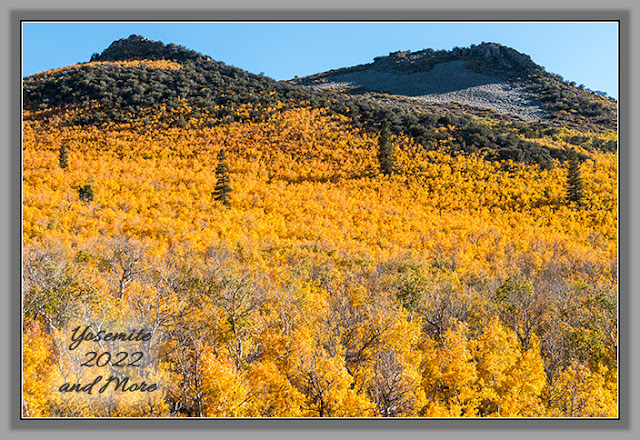
Recently took a trip to the Eastside of the Sierras in part to find some fall colors, and boy did we. It was a great day if not rather long. Also went to Bodie and Mono Lake but that's for another post. This was our first stop, not bad!! I always like how the sun make the aspens jump with color when backlit. These leaves while not turned completely formed a nice heart shape. Aspens, Aspens, Aspens Aspen trunks seem to just grow any which way, and I like it. Many layers, Aspens, Pines, Mountains. Makes a guy who likes lines get a big smile. Go, See, Enjoy, Stay Safe and Photograph Dave
I had to go to Sacramento for my job (the semi part of semi-retired). Since I was done early I decided to visit Old Sacramento. But first a little story. Since I had spilled some chemical down my pant leg and it looked ...um... unseemly, I went out and bought a pair of shorts and some socks, and was ready to go. I'm a member of the California Railroad Museum and therefore got in free. It wasn't a disappointment from a railroad fan point of view. I was however disappointed from a photographers point of view. The museum was quite dark, no tripods allowed, and most of the exhibits were under glass. I did get a couple of inside shots I liked. This is the water injector that put the water in the boiler, a very mundane function but in yesteryear an opportunity to shine. An this is one of the most famous color schemes. It's the Santa Fe's War Bonnet colors. A modified version is used today by the Atchison Topeka and Santa...
My brother Jim took me on a little tour of the North State beginning with the little town of Hornbrook. It's a former major stop for the Southern Pacific Railroad before the Siskiyou Summit. As with most rural areas there are some interesting uses of materials. Before the advent of automatic crossing guards men would stay safe from the weather in one of these waiting to stop traffic from an approaching train. I'm sure without automatic crossing guards or someone controlling the crossing this would work to stop the train. Four dams were removed from the Klamath River. Restoration work is continuing, but for the time being the former reservoirs look like this. It's recently been reported that a few salmon have returned. Go, See, Enjoy, be Safe and Photograph Dave



Comments
Post a Comment